Key Takeaways
Choosing the right Tesla mattress comes down to three things: type, thickness, and fit for your specific model. Get those right and you'll sleep well.
- Foam mattresses are the best all-around choice for comfort, durability, and fit in Tesla cargo areas.
- Aim for 4-6 inches of thickness to balance comfort with headroom in the car.
- Always buy a mattress designed for your specific Tesla model — universal options are a compromise.
Tesla Mattress Types Explained
There are three main types of Tesla camping mattresses: foam, air, and hybrid. Each has genuine strengths and real trade-offs. Understanding the differences is the most important step in choosing the right one for you.
Foam Mattresses
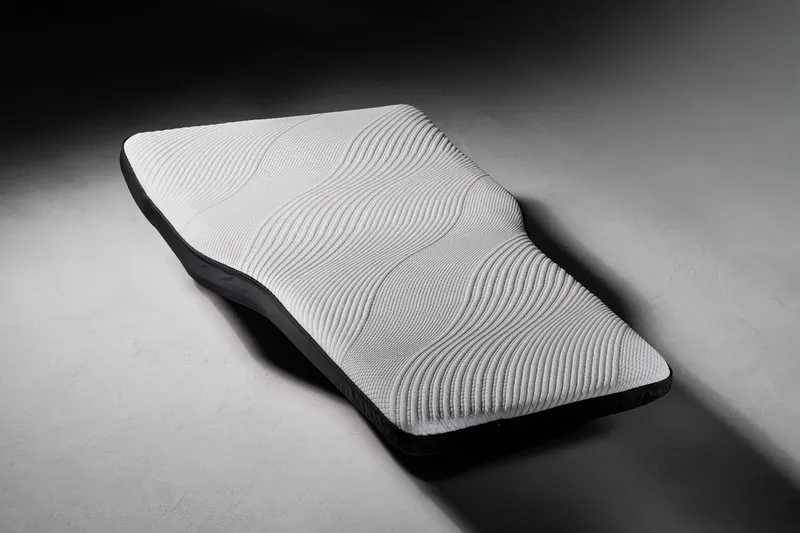
Foam mattresses are the most popular choice for Tesla camping, and for good reason. They use dense foam cut to match Tesla cargo dimensions, providing a ready-to-sleep surface the moment you unfold them. No inflation, no pumps, no fuss.
- Instant Setup — Unfold and you're done. No pump needed, no waiting for inflation. From trunk to sleeping in under 2 minutes.
- No Puncture Risk — Foam can't deflate overnight. You'll never wake up on the hard cargo floor because of a slow leak.
- Consistent Comfort — Foam provides the same support every night. No adjustments needed, no firmness drift over time.
Foam isn't perfect. Here are the trade-offs you should know about before committing.
- Larger Storage Size — Foam doesn't compress as small as deflated air mattresses, so it takes up more trunk space when stored.
- Fixed Firmness — You get what you get. If the foam is too firm or too soft for your preference, you can't adjust it.
- Heat Retention — Dense foam can trap body heat, especially memory foam. Look for options with breathable covers if you run hot.
Top foam options include the Snuuzu (our highest-rated overall), Havnby Foam (best budget), and TESMAT Luxe (best complete kit).
Air Mattresses
Air mattresses use inflatable chambers to create a sleeping surface. They're the lightest and most compact option when deflated, making them appealing for travelers who need maximum storage efficiency. Some Tesla-specific air mattresses are shaped to fit cargo areas, while others are universal.
- Compact Storage — When deflated, air mattresses pack down to a fraction of their inflated size. Perfect for keeping in the frunk or sub-trunk.
- Adjustable Firmness — Add or release air to find your perfect firmness level. Great if you and a partner have different preferences.
- Lightweight — Most air mattresses weigh 3-5 lbs, making them the lightest option by far for backpacking or carrying.
Air mattresses have some significant drawbacks for Tesla camping that you should weigh carefully.
- Puncture Risk — One small puncture and you're sleeping on the floor. Tesla cargo areas have metal edges and latches that increase this risk.
- Setup Time — Inflation takes 3-10 minutes depending on the pump. Electric pumps are faster but add noise and another item to pack.
- Temperature Sensitivity — Air pressure changes with temperature. A mattress inflated during warm evening can feel soft and underinflated by cold morning.
Hybrid Mattresses
Hybrid mattresses combine a foam base with an air-adjustable top layer, aiming to deliver the best of both worlds. The foam provides a stable, puncture-proof foundation while the air chamber lets you fine-tune firmness. They're a newer category that's gained popularity in the last couple of years.
- Adjustable + Stable — The foam base ensures you never bottom out, while the air layer lets you customize firmness to your preference.
- Puncture-Resistant — Even if the air layer deflates, the foam base still provides a usable sleeping surface. You're never on the bare floor.
- Good Insulation — The foam layer provides thermal insulation from the cold cargo floor that pure air mattresses lack.
Hybrids have their own set of compromises that come from trying to combine two different technologies.
- Higher Complexity — More components mean more potential failure points. Valves, seams, and the foam-air interface can all develop issues.
- Higher Price — Combining two mattress technologies costs more. Hybrids typically start around $200 and go up from there.
Notable hybrids include the NovaPads (budget-friendly) and the DreamCase Hybrid (premium). The category is still evolving with new options appearing regularly.
| Feature | Foam | Air | Hybrid |
|---|---|---|---|
| Comfort | 8-9/10 | 6-8/10 | 8-9/10 |
| Price Range | $150 – $300 | $80 – $200 | $200 – $900 |
| Storage Size | Large (rolled/folded) | Small (deflated) | Medium |
| Setup Time | 1-2 minutes | 3-10 minutes | 3-5 minutes |
| Durability | High (3-5+ years) | Medium (1-3 years) | Medium-High (2-4 years) |
| Adjustability | None (fixed firmness) | Full (add/release air) | Partial (air layer only) |
| Weight | 8-15 lbs | 3-5 lbs | 6-12 lbs |
| Best For | Most campers, reliability | Ultra-light packing, space | Adjustable comfort seekers |
Key Factors When Choosing
Beyond mattress type, there are six factors that determine whether a Tesla mattress will work for you. I've listed them in order of importance based on what matters most for real-world car camping comfort.
Thickness
Thickness is the single biggest predictor of comfort. Too thin and you'll feel every contour of the cargo floor beneath you. Too thick and you lose headroom, making the sleeping space feel claustrophobic. The ideal range for Tesla camping is 4-6 inches, with 5 inches being the sweet spot for most sleepers.
Thickness Guide Under 3 inches: only for occasional, emergency use. 3-4 inches: adequate for back sleepers on short trips. 4-5 inches: good comfort for most people and sleeping positions. 5-6 inches: excellent comfort, especially for side sleepers. Over 6 inches: diminishing returns due to lost headroom.
Storage Size
When you're not sleeping on it, the mattress has to go somewhere. Foam mattresses fold or roll but still take up significant trunk space. Air mattresses deflate to almost nothing. Hybrids fall in between. Think about where you'll store the mattress and whether it needs to share space with other gear.
If you want to keep a mattress in your Tesla permanently as a just-in-case option, prioritize compact storage. If you only set up for planned camping trips and have the full trunk available, storage size matters less than comfort.
Weight
Weight matters less than you'd think for Tesla camping since you're not carrying the mattress far. But if you plan to haul it from the car to a tent, across a campsite, or up stairs to a guest room for double-duty use, lighter is better. Foam mattresses range from 8-15 lbs, air from 3-5 lbs, and hybrids from 6-12 lbs.
Model Compatibility
This is non-negotiable: your mattress must fit your specific Tesla model. Model Y, Model 3, Model X, and Cybertruck all have different cargo dimensions, floor shapes, and hinge locations. A mattress designed for the wrong model will have gaps, overhang, or won't address model-specific issues like the trunk hinge gap.
Compatibility Warning Never assume a Model Y mattress will fit a Model 3 or vice versa. The Model 3 is narrower and shorter. Model X has a completely different cargo layout. And the Cybertruck bed is wider than any of them. Always verify the mattress is listed for your specific model and year.
Price
Tesla camping mattresses range from about $150 to $900. Higher price generally means better foam density, nicer covers, and more accessories. But the comfort difference narrows at the top end. Here's how the price tiers break down.
- Budget ($150-$250) — Solid foam options with adequate comfort for occasional camping. Good for first-timers and light users.
- Mid-Range ($250-$500) — Better foam density, premium covers, and often bundled accessories. The sweet spot for regular campers.
- Premium ($500-$900) — Top-tier materials, best comfort scores, and extensive accessories. Worth it for frequent campers and comfort seekers.
Materials & Build Quality
The materials used in a Tesla mattress directly affect comfort, durability, and sleep temperature. Here are the most common materials you'll encounter and what they mean for your sleep.
- Memory Foam — Contours to your body shape and distributes pressure evenly. Excellent for side sleepers. Can retain heat, so look for gel-infused versions.
- Polyurethane Foam — Firmer and more resilient than memory foam. Bounces back faster and retains less heat. Common in budget and mid-range options.
- TPU (Thermoplastic Polyurethane) — Used in air chambers and hybrid mattresses. Durable, flexible, and more puncture-resistant than PVC. The gold standard for inflatable components.
- Lyocell / Tencel Covers — Plant-based fabric that's naturally breathable, moisture-wicking, and soft to the touch. Found on premium mattresses and worth seeking out if you sleep hot.
Model-Specific Considerations
Every Tesla model presents different challenges and opportunities for camping. Here's a quick comparison followed by specific advice for each model.
| Consideration | Model Y | Model 3 | Model X | Cybertruck |
|---|---|---|---|---|
| Sleep Area | 78" x 41" | 76" x 37" | 84" x 43" | 81" x 52" |
| Mattress Options | Most options (15+) | Limited (6-8) | Few (3-4) | Growing (5-6) |
| Headroom | Good (28") | Limited (24") | Best (32") | N/A (open bed) |
| Camp Mode | Yes (all models) | Yes (all models) | Yes (all models) | Yes (all models) |
| Our Top Pick | Snuuzu | Snuuzu | Havnby Autolevel | Tesery CT |
| Budget Pick | Havnby Foam | Havnby Foam | Havnby Foam | Varies (new market) |
Tesla Model Y
The Model Y is the most popular Tesla for camping, and for good reason. It has the best combination of cargo space, headroom, and mattress options. The SUV form factor provides a naturally comfortable sleeping environment, and almost every Tesla mattress brand prioritizes Model Y compatibility.
Our top picks for Model Y are the Snuuzu (9.4/10 overall) and the Havnby Foam ($259 for budget campers). See our full Model Y mattress rankings for the complete breakdown. See Model Y Mattress Reviews.
Tesla Model 3
The Model 3 is a viable but more challenging camping platform. The sedan form factor means less headroom, a narrower cargo area, and the infamous trunk hinge gap. You need a Model 3-specific mattress that addresses these constraints. The good news is the best Model 3 options are excellent.
The Snuuzu M3 (9.3/10) is our top Model 3 pick, with the Havnby Foam as a budget alternative. See our dedicated Model 3 guide for the full comparison. Model 3 vs. Model Y Camping.
Tesla Model X
The Model X offers the most sleeping space of any Tesla sedan/SUV thanks to its larger cargo area and higher roofline. The falcon wing doors can even provide ventilation in good weather. However, mattress options are limited since the Model X is less popular for camping than the Y.
Fewer brands make Model X-specific mattresses, but the ones that do take advantage of the extra space. Check our Model X camping guide for current recommendations. Model X Camping Guide.
Tesla Cybertruck
The Cybertruck is a completely different camping experience. The open bed with a tonneau cover or tent creates a spacious sleeping area that's wider than any other Tesla. Mattress options are growing rapidly as more Cybertrucks hit the road and brands develop truck-specific products.
Cybertruck camping mattresses are a newer market, but several strong options have emerged. See our Cybertruck guide for the latest reviews and recommendations. Cybertruck Camping Guide.

How We Test & Score
Every mattress on TeslaMattress.com goes through the same rigorous testing process. I've been refining this methodology since 2017, and it's designed to capture what actually matters when you're sleeping in a car.
Our Testing Process
Each mattress gets a minimum of three nights of real-world testing in the specific Tesla model it's designed for. Here's exactly what I do during each evaluation.
- Unboxing & First Impressions — I evaluate packaging, initial setup difficulty, instructions quality, and first-touch material feel. How long does it take from opening the box to being ready to sleep?
- Fit & Installation — I check how precisely the mattress fits the cargo area, test for gaps or overhang, and evaluate how well it addresses the trunk hinge area.
- Comfort Testing (3+ Nights) — I sleep on each mattress for at least three nights, testing different sleeping positions. I note pressure points, temperature, and overall sleep quality.
- Durability Assessment — I check for foam compression, seam integrity, and cover wear after testing. For long-term reviews, I revisit mattresses after 6 and 12 months of use.
- Storage & Portability — I measure packed dimensions and weight, test how easy it is to fold/roll, and whether it fits in the frunk, sub-trunk, or trunk alongside other gear.
- Value Analysis — I calculate cost per use, compare the price to comfort ratio against competitors, and evaluate included accessories and warranty terms.
Scoring Criteria
Each mattress is scored on five categories, weighted to reflect what matters most in real-world Tesla camping. The weights are based on feedback from hundreds of Tesla campers.
| Category | Weight | What We Measure |
|---|---|---|
| Comfort (35%) | 30% | Foam quality, pressure relief, temperature regulation, sleep quality across positions |
| Build Quality (20%) | 25% | Materials, stitching, zipper quality, cover durability, long-term foam resilience |
| Fit & Finish (10%) | 20% | Cargo area precision, gap coverage, edge stability, aesthetic details |
| Setup & Storage (15%) | 15% | Setup time, ease of folding, packed dimensions, weight, storage bag quality |
| Value (20%) | 10% | Price vs. comfort, cost per use, included accessories, warranty coverage |
Want more detail on how we test? See our full methodology page for scoring breakdowns and testing standards. Read Full Methodology.
Which Mattress Should You Buy?
If you're still not sure which direction to go, use this decision framework. I've organized it by the most common buyer profiles I see.
Find Your Perfect Match
Start with your primary priority and follow the recommendation. These picks are based on hundreds of hours of testing and reader feedback.
- On a Budget — Get the Havnby Foam ($259). Best comfort per dollar, fits Model Y and 3, no-brainer for cost-conscious campers.
- Occasional Camper — The Havnby Foam or TESMAT Solo is perfect. Save money on the mattress and spend it on the road trip.
- Frequent Camper — Invest in the Snuuzu. The premium comfort and durability pay for themselves quickly at 20+ nights per year.
- Want the Best — The Snuuzu is the top-rated mattress on the site. If budget isn't the primary concern, this is the one to get.
- Camping as a Couple — Look at the wider mattress options like the TESMAT Duo or Snuuzu. You need maximum width and thicker foam for two people.
- Need Compact Storage — Consider a hybrid or the Havnby Solo. They pack down smaller than full foam options when you need the trunk for other gear.
Still Not Sure? Start with the Havnby Foam at $259. It's the lowest-risk entry point into Tesla camping. If you love the experience and want to upgrade later, you'll know exactly what features matter to you. Most readers who email me wishing they'd spent more end up being frequent campers who discovered they love it.
What to Avoid
I've tested plenty of mattresses that didn't make the cut. Here are the red flags to watch for when shopping.
- Generic Car Mattresses — Mattresses marketed as fitting "any SUV" or "universal car camping" rarely fit Teslas properly. You'll get gaps, overhang, and no trunk hinge solution.
- Under 3 Inches Thick — Anything under 3 inches provides minimal cushioning over the hard cargo floor. You'll feel every ridge and contour, especially on your hips and shoulders.
- No Warranty or Return Policy — Reputable brands stand behind their products. If a manufacturer doesn't offer at least a 1-year warranty, that's a red flag about their confidence in build quality.
- Oversized Mattresses — A mattress that's too wide or too long for your Tesla will bunch up against the walls and create an uneven sleeping surface. Precise fit matters more than extra padding.

Frequently Asked Questions
What type of mattress is best for sleeping in a Tesla?
Foam mattresses are the best all-around choice for most Tesla campers. They provide consistent comfort, don't risk punctures, require zero setup, and fill the cargo area gaps better than air mattresses. If you want adjustable firmness, consider a hybrid that combines foam with an air layer.
How thick should a Tesla camping mattress be?
Aim for 4-6 inches of thickness. Under 4 inches and you'll feel the hard cargo floor, especially if you're a side sleeper. Over 6 inches and you start losing valuable headroom in the car. The sweet spot for most people is around 5 inches, which balances comfort with usable space.
Do Tesla mattresses fit all Tesla models?
No. Each Tesla model has different cargo dimensions, so you need a mattress designed for your specific model. Model Y mattresses won't fit properly in a Model 3, and Cybertruck mattresses are a completely different shape. Some brands offer universal options that work across multiple models, but always verify compatibility.
How much should I spend on a Tesla camping mattress?
Budget options start around $150-$250 and are fine for occasional camping. Mid-range mattresses from $250-$500 offer better comfort and durability for regular use. Premium options from $500-$900 are worth it for frequent campers who want the best sleep possible. Choose based on how often you'll use it.
Can I use a regular camping mattress in my Tesla instead?
You can, but you'll get a worse experience. Regular camping mattresses aren't shaped to fit Tesla cargo areas, so you'll have gaps, overhang, and no solution for the trunk hinge area. Tesla-specific mattresses cost about the same as quality camping pads but deliver a much better fit and sleep.
Ready to Choose Your Mattress?
Now that you know what to look for, browse our full reviews to find the perfect mattress for your Tesla and budget. Every mattress on our site has been personally tested with the methodology described above.