Key Takeaways
Start with exact vehicle fit and sleeper count, then compare construction, packed size, remaining headroom, warranty and return eligibility.
- Foam, air and foam-and-air designs each exchange simplicity, storage size and adjustability.
- Mattress depth affects both cushioning potential and usable cabin headroom; there is no universal ideal.
- A fitted design can use the cargo shape efficiently, while a measured generic pad may be cheaper and more versatile.
Tesla Mattress Types Explained
There are three main types of Tesla camping mattresses: foam, air, and hybrid. Each has genuine strengths and real trade-offs. Understanding the differences is the most important step in choosing the right one for you.
Foam Mattresses
Foam mattresses are the most popular choice for Tesla camping, and for good reason. They use dense foam cut to match Tesla cargo dimensions, providing a ready-to-sleep surface the moment you unfold them. No inflation, no pumps, no fuss.
- Instant Setup — Unfolding requires no pump or valve. Actual setup time depends on the product, bedding and cargo that must be moved.
- No Puncture Risk — Foam can't deflate overnight. You'll never wake up on the hard cargo floor because of a slow leak.
- Consistent Comfort — Foam has fixed firmness and no air-pressure adjustment. Support can still change with temperature, wear and compression.
Foam isn't perfect. Here are the trade-offs you should know about before committing.
- Larger Storage Size — Foam doesn't compress as small as deflated air mattresses, so it takes up more trunk space when stored.
- Fixed Firmness — You get what you get. If the foam is too firm or too soft for your preference, you can't adjust it.
- Heat Retention — Dense foam can trap body heat, especially memory foam. Look for options with breathable covers if you run hot.
Current foam-and-air options include Snuuzu, Havnby FlatCore, Havnby CloudCore, NovaPads Air-Foam Pro and TESMAT Horizon. Compare each product's exact layers, pump and fitted vehicle variant.
Air Mattresses
Air mattresses use inflatable chambers to create a sleeping surface. They're the lightest and most compact option when deflated, making them appealing for travelers who need maximum storage efficiency. Some Tesla-specific air mattresses are shaped to fit cargo areas, while others are universal.
- Compact Storage — Air designs often pack smaller when deflated. Confirm the published packed dimensions before assuming they fit a frunk or sub-trunk.
- Adjustable Firmness — Air pressure can be adjusted, although one shared chamber may not accommodate two different firmness preferences.
- Lightweight — Some air-only designs are lighter than foam systems, but fitted products, pumps and covers vary; use the exact listed weight.
Air mattresses have some significant drawbacks for Tesla camping that you should weigh carefully.
- Puncture Risk — A puncture, seam leak or valve problem can reduce support. Protect the surface and check whether a repair kit or replacement chamber is available.
- Setup Time — Inflation time depends on chamber volume and pump. Treat seller timing as a manufacturer claim unless independently measured.
- Temperature Sensitivity — Air pressure changes with temperature. A mattress inflated during warm evening can feel soft and underinflated by cold morning.
Hybrid Mattresses
Hybrid mattresses combine a foam base with an air-adjustable top layer, aiming to deliver the best of both worlds. The foam provides a stable, puncture-proof foundation while the air chamber lets you fine-tune firmness. They're a newer category that's gained popularity in the last couple of years.
- Adjustable + Stable — The foam base ensures you never bottom out, while the air layer lets you customize firmness to your preference.
- Puncture-Resistant — A foam layer may retain some separation from the cargo floor if an air chamber loses pressure, but usable support depends on the specific construction.
- Good Insulation — A foam layer may affect heat transfer, but insulation performance requires a published R-value or controlled testing that most current listings do not provide.
Hybrids have their own set of compromises that come from trying to combine two different technologies.
- Higher Complexity — More components mean more potential failure points. Valves, seams, and the foam-air interface can all develop issues.
- Higher Price — Combining two mattress technologies costs more. Hybrids typically start around $200 and go up from there.
Current foam-and-air examples include NovaPads Air-Foam Pro, Snuuzu and TESMAT Horizon. Compare each product's actual layer description because brands use category labels inconsistently.
| Feature | Foam | Air | Hybrid |
|---|---|---|---|
| Comfort | Depends on firmness, depth and sleeper | Depends on chamber design and pressure | Depends on layers, pressure and sleeper |
| Price Range | $150 – $300 | $80 – $200 | $200 – $900 |
| Storage Size | Large (rolled/folded) | Small (deflated) | Medium |
| Setup Time | Unfold; product-specific | Inflate; product and pump-specific | Product and pump-specific |
| Durability | Check foam, cover and warranty | Check seams, valves and repairability | Check every layer and warranty |
| Adjustability | None (fixed firmness) | Full (add/release air) | Partial (air layer only) |
| Weight | Product-specific | Product-specific | Product-specific |
| Best For | No-pump simplicity | Ultra-light packing, space | Adjustable comfort seekers |
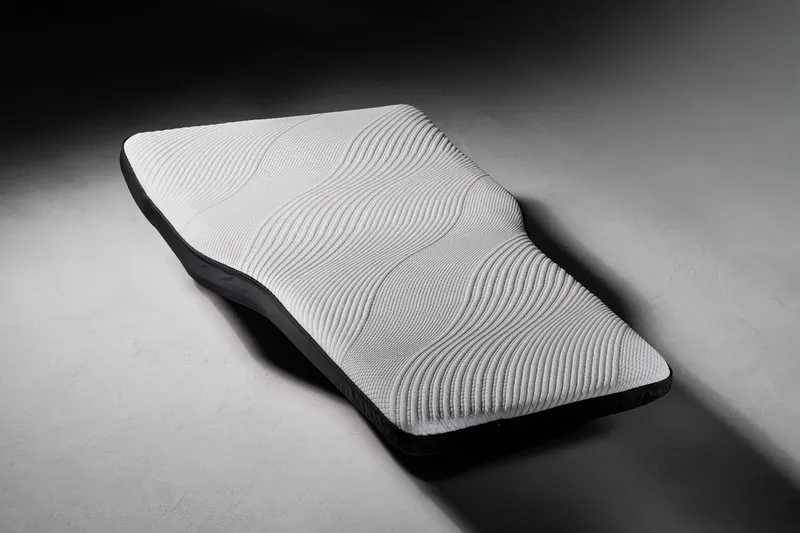
Key Factors When Choosing
Beyond mattress type, there are six factors that determine whether a Tesla mattress will work for you. I've listed them in order of importance based on what matters most for real-world car camping comfort.
Thickness
Thickness changes cushioning potential and remaining headroom, but it is not a standalone comfort score. Firmness, internal support, sleeper position, body weight and the vehicle-floor shape can matter just as much. Compare the product depth with a measurement from the intended sleeping surface to the roof.
Thickness Guide Record the mattress at its thickest point, then check sitting and turning clearance in the car. A deeper product can cushion more but may make the cabin harder to use; a thinner product may need better shaping or separate support.
Storage Size
When you're not sleeping on it, the mattress has to go somewhere. Foam mattresses fold or roll but still take up significant trunk space. Air mattresses deflate to almost nothing. Hybrids fall in between. Think about where you'll store the mattress and whether it needs to share space with other gear.
If you want to keep a mattress in your Tesla permanently as a just-in-case option, prioritize compact storage. If you only set up for planned camping trips and have the full trunk available, storage size matters less than comfort.
Weight
Weight affects loading, drying and storage even when the mattress stays near the car. Use the exact product weight—including pump, bag and support pieces—because construction labels do not predict a reliable range.
Model Compatibility
This is non-negotiable: your mattress must fit your specific Tesla model. Model Y, Model 3, Model X, and Cybertruck all have different cargo dimensions, floor shapes, and hinge locations. A mattress designed for the wrong model will have gaps, overhang, or won't address model-specific issues like the trunk hinge gap.
Compatibility Warning Never assume a Model Y mattress will fit a Model 3 or vice versa. The Model 3 is narrower and shorter. Model X has a completely different cargo layout. And the Cybertruck bed is wider than any of them. Always verify the mattress is listed for your specific model and year.
Price
Current observed prices in our set run from $140 for a one-person pad to €899/$899 for a premium full-width system. Higher price can reflect size, construction or included equipment, but it does not prove better comfort or durability.
- Budget ($150-$250) — May include a solo foam pad or lower-priced air-foam option. Confirm fit, warranty and what is included.
- Mid-Range ($250-$500) — May add shaped support, deeper construction or bundled equipment. Verify the exact specification rather than the tier label.
- Premium ($500-$900) — May offer a larger or more complete system. Judge the documented features, service terms and delivered total individually.
Materials & Build Quality
The materials used in a Tesla mattress directly affect comfort, durability, and sleep temperature. Here are the most common materials you'll encounter and what they mean for your sleep.
- Memory Foam — Viscoelastic foam changes feel with temperature and load. Density, firmness and layer thickness are more informative than the label alone.
- Polyurethane Foam — A broad foam category with widely varying density and firmness. Ask for specific material data when longevity or support is important.
- TPU (Thermoplastic Polyurethane) — Commonly used for inflatable structures. Seam design, thickness, valve quality and repair options still determine real-world performance.
- Lyocell / Tencel Covers — A fiber used in some removable covers. Check the complete fabric blend and care instructions rather than assuming one fiber guarantees cooling.
Model-Specific Considerations
Every Tesla model presents different challenges and opportunities for camping. Here's a quick comparison followed by specific advice for each model.
| Consideration | Model Y | Model 3 | Model X | Cybertruck |
|---|---|---|---|---|
| Sleep Area | 78" x 41" | 76" x 37" | 84" x 43" | 81" x 52" |
| Mattress Options | Most options (15+) | Limited (6-8) | Few (3-4) | Growing (5-6) |
| Headroom | Good (28") | Limited (24") | Best (32") | N/A (open bed) |
| Camp Mode | Yes (all models) | Yes (all models) | Yes (all models) | Yes (all models) |
| Our Top Pick | Snuuzu | Snuuzu | Havnby FlatCore Hybrid | Tesery CT |
| Budget Pick | NovaPads Air-Foam Pro | TESMAT Solo Model 3 | Havnby CloudCore Hybrid | Varies (new market) |
Tesla Model Y
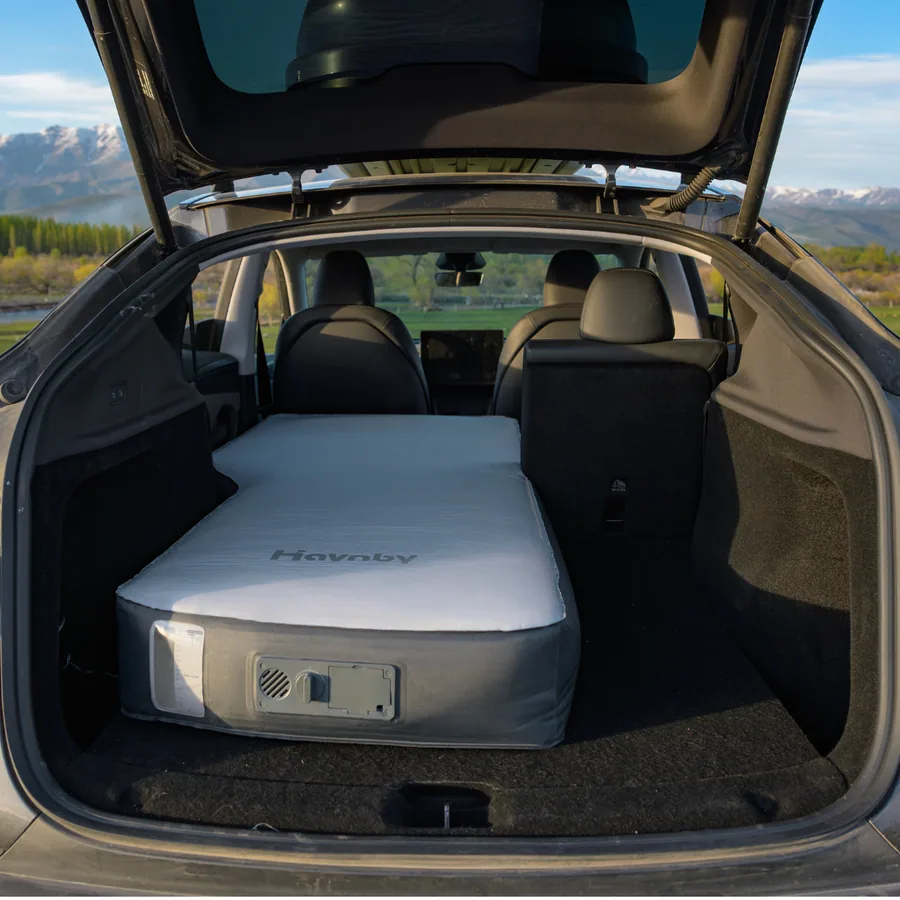
The Model Y is the most popular Tesla for camping, and for good reason. It has the best combination of cargo space, headroom, and mattress options. The SUV form factor provides a naturally comfortable sleeping environment, and almost every Tesla mattress brand prioritizes Model Y compatibility.
Our top picks for Model Y are the Snuuzu (9.4/10 overall) and the NovaPads Air-Foam Pro ($239 for budget campers). See our full Model Y mattress rankings for the complete breakdown. See Model Y Mattress Reviews.
Tesla Model 3
The Model 3 is a viable but more challenging camping platform. The sedan form factor means less headroom, a narrower cargo area, and the infamous trunk hinge gap. You need a Model 3-specific mattress that addresses these constraints. The good news is the best Model 3 options are excellent.
The Snuuzu Model 3 (9.3/10) is our top Model 3 pick. Current alternatives include TESMAT Horizon, TESMAT Solo and Havnby CloudCore with the exact Model 3 year selected. See our dedicated guide for the full comparison. Model 3 vs. Model Y Camping.
Tesla Model X
The Model X offers the most sleeping space of any Tesla sedan/SUV thanks to its larger cargo area and higher roofline. The falcon wing doors can even provide ventilation in good weather. However, mattress options are limited since the Model X is less popular for camping than the Y.
Fewer brands make Model X-specific mattresses, but the ones that do take advantage of the extra space. Check our Model X camping guide for current recommendations. Model X Camping Guide.
Tesla Cybertruck
The Cybertruck is a completely different camping experience. The open bed with a tonneau cover or tent creates a spacious sleeping area that's wider than any other Tesla. Mattress options are growing rapidly as more Cybertrucks hit the road and brands develop truck-specific products.
Cybertruck camping mattresses are a newer market, but several strong options have emerged. See our Cybertruck guide for the latest reviews and recommendations. Cybertruck Camping Guide.
How We Rate & Score
Every mattress on TeslaMattress.com goes through the same review process. It's built on verified manufacturer specs, aggregated owner feedback, and price tracking, and it's designed to capture what actually matters when you're sleeping in a car.
Our Review Process
Each mattress is evaluated against the specific Tesla model it's designed for. Here's exactly what goes into each review.
- Unboxing & First Impressions — We compare packaging, setup difficulty, and material quality using manufacturer documentation and owners' unboxing reports. How long does it take from opening the box to being ready to sleep?
- Fit & Installation — We check the published dimensions against the cargo area, flag any reported gaps or overhang, and evaluate how each design addresses the trunk hinge area.
- Comfort Assessment — We aggregate comfort feedback from owner reviews across sleeping positions, noting recurring reports of pressure points, temperature issues, and overall sleep quality.
- Durability Assessment — We track owner reports of foam compression, seam integrity, and cover wear, and revisit reviews as long-term feedback accumulates.
- Storage & Portability — We compare packed dimensions and weight from official specs, and check whether each mattress fits in the frunk, sub-trunk, or trunk alongside other gear.
- Value Analysis — We calculate cost per use, compare the price-to-comfort ratio against competitors, and evaluate included accessories and warranty terms.
Scoring Criteria
The weights reflect our editorial framework for published comfort design, build specification, fit, setup and value. They are not derived from a claimed survey sample or hands-on sleep lab.
| Category | Weight | What We Measure |
|---|---|---|
| Comfort (35%) | 30% | Foam quality, pressure relief, temperature regulation, sleep quality across positions |
| Build Quality (20%) | 25% | Materials, stitching, zipper quality, cover durability, long-term foam resilience |
| Fit & Finish (10%) | 20% | Cargo area precision, gap coverage, edge stability, aesthetic details |
| Setup & Storage (15%) | 15% | Setup time, ease of folding, packed dimensions, weight, storage bag quality |
| Value (20%) | 10% | Price vs. comfort, cost per use, included accessories, warranty coverage |
Want more detail on how we rate? See our full methodology page for scoring breakdowns and rating standards. Read Full Methodology.
Which Mattress Should You Buy?
If you're still not sure which direction to go, use this decision framework. It's organized by the most common buyer profiles.
Find Your Perfect Match
Start with your primary priority and follow the recommendation. These picks are based on our full rankings and owner feedback.
- On a Budget — Compare the NovaPads Air-Foam Pro ($239) for a Model Y with TESMAT Solo ($140) for one sleeper. Confirm the exact vehicle fit and delivered total.
- Occasional Camper — TESMAT Solo prioritizes low cost and pump-free setup; Havnby CloudCore adds a full-width foam-and-air format at $399. Choose from fit, width and storage needs.
- Frequent Camper — Compare the deeper fitted systems by current specifications, trial terms and your own support preferences; do not treat frequency as an automatic reason to buy the most expensive option.
- Want the Best — The Snuuzu is the top-rated mattress on the site. If budget isn't the primary concern, this is the one to get.
- Camping as a Couple — Look at the wider mattress options like the TESMAT Duo or Snuuzu. You need maximum width and thicker foam for two people.
- Need Compact Storage — Consider a hybrid or Havnby FlatCore Solo Edition. Compare published packed dimensions when you need the trunk for other gear.
Still Not Sure? Start with the TESMAT Solo at $140 or the NovaPads Air-Foam Pro at $239. They're the lowest-risk entry points into Tesla camping. If you love the experience and want to upgrade later, you'll know exactly what features matter to you. Readers who regret their first purchase are usually frequent campers who discovered they love it and wish they'd bought thicker.
What to Avoid
Plenty of mattresses didn't make our cut. Here are the red flags to watch for when shopping.
- Generic Car Mattresses — Mattresses marketed as fitting "any SUV" or "universal car camping" rarely fit Teslas properly. You'll get gaps, overhang, and no trunk hinge solution.
- Under 3 Inches Thick — Anything under 3 inches provides minimal cushioning over the hard cargo floor. You'll feel every ridge and contour, especially on your hips and shoulders.
- No Warranty or Return Policy — Reputable brands stand behind their products. If a manufacturer doesn't offer at least a 1-year warranty, that's a red flag about their confidence in build quality.
- Oversized Mattresses — A mattress that's too wide or too long for your Tesla will bunch up against the walls and create an uneven sleeping surface. Precise fit matters more than extra padding.
Frequently Asked Questions
What type of mattress is best for sleeping in a Tesla?
There is no universally best construction. Foam removes pump and valve dependency but is bulkier; air packs smaller and adjusts; foam-and-air designs combine support layers with added complexity. Choose from exact fit, sleeper count, packed size, headroom and return terms.
How thick should a Tesla camping mattress be?
No single thickness guarantees comfort. A deeper mattress can add cushioning but reduces cabin headroom; firmness, internal support, body position and the vehicle-floor shape also matter. Compare the maker's measurements with your own available headroom.
Do Tesla mattresses fit all Tesla models?
No. Each Tesla model has different cargo dimensions, so you need a mattress designed for your specific model. Model Y mattresses won't fit properly in a Model 3, and Cybertruck mattresses are a completely different shape. Some brands offer universal options that work across multiple models, but always verify compatibility.
How much should I spend on a Tesla camping mattress?
Our currently observed prices run from $140 for a one-person TESMAT Solo to €899/$899 for Snuuzu. Compare delivered price, model fit, construction, included equipment, warranty and return terms; price does not guarantee comfort or durability.
Can I use a regular camping mattress in my Tesla instead?
Yes. A generic pad can cost less and work in tents or other vehicles, but it may leave unused space or require separate support for the folded-seat transition. Measure the available floor and compare the actual dimensions before choosing.
Ready to Choose Your Mattress?
Now that you know what to look for, browse our full reviews to find the perfect mattress for your Tesla and budget. Every mattress on our site is reviewed with the methodology described above.