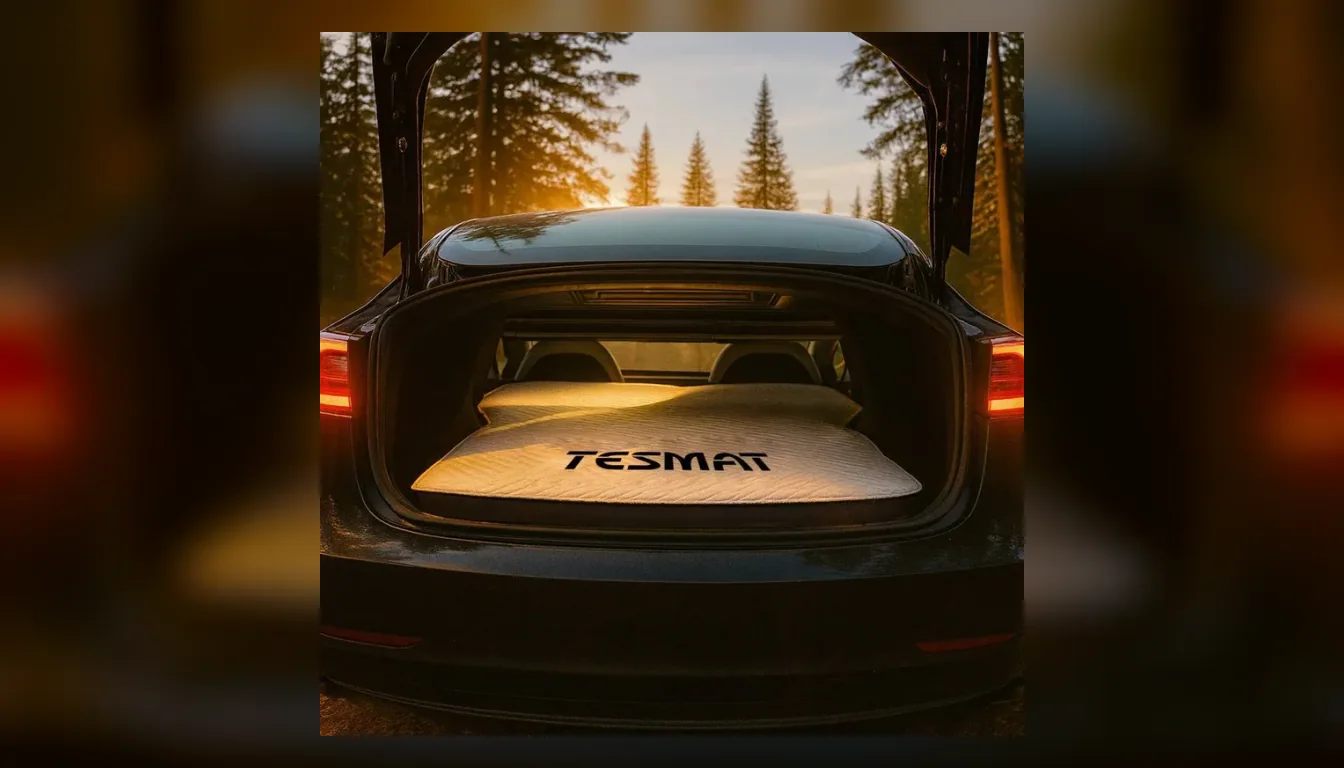
Why thickness is not a warmth rating
A deep mattress may place more material between you and the floor, but air movement, foam density, seams and compression all affect heat transfer. Without comparable tested R-values, declaring Snuuzu, Havnby or NovaPads the warmest would overstate the evidence.
Winter selection criteria
- A fitted shape that does not leave large cold gaps around the torso
- Materials and valves rated by the seller for expected conditions
- Bedding rated for the forecast, independent of Camp Mode
- A surface and cover that can be dried before storage
- A repair or backup plan for inflatable layers
For pressure-sensitive sleepers, depth may still matter for comfort: compare the 20 cm Snuuzu Model Y and 19 cm maximum Havnby FlatCore. Those are geometry facts, not thermal test results. Pair the mattress decision with our winter safety and battery answer.
Build a winter system, not a one-product solution
The mattress is only one part of the thermal path. Bedding, clothing, floor gaps, compressed insulation, window moisture and the reliability of cabin climate all affect the night. A thick air chamber may look substantial but does not become a tested insulation layer without a published measurement method and R-value.
Pre-trip cold-weather check
- Test the complete sleep system near home in similar temperatures.
- Charge fully enough to preserve a conservative weather and detour margin.
- Bring bedding that remains adequate if climate control stops.
- Keep vents, exterior air intakes and exits free of snow and gear.
- Ventilate moisture and dry the cover before packing.
- Know the nearest open charger and a safe indoor fallback.
We rank fit and published construction, not invented warmth performance. Recheck Tesla's current winter and Camp Mode guidance before each cold-weather trip.
Plan the whole Tesla sleep setup
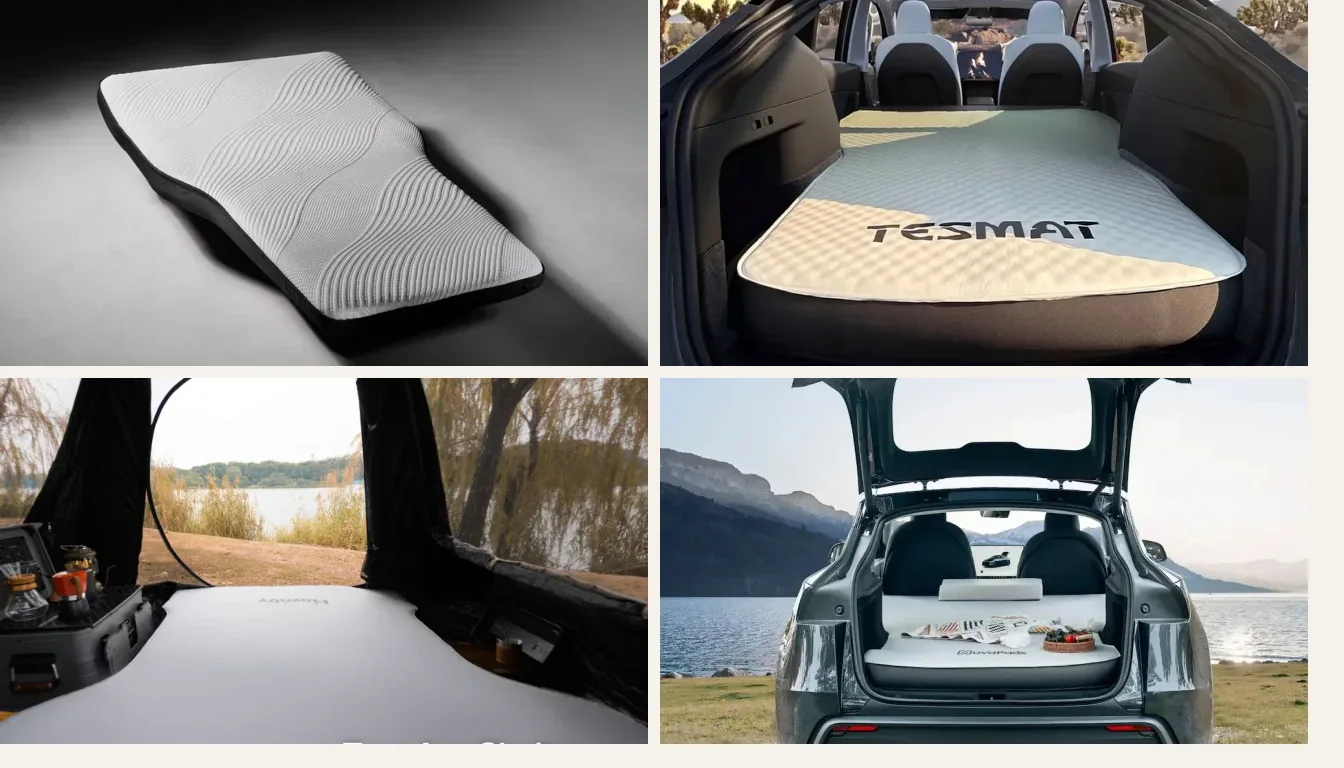
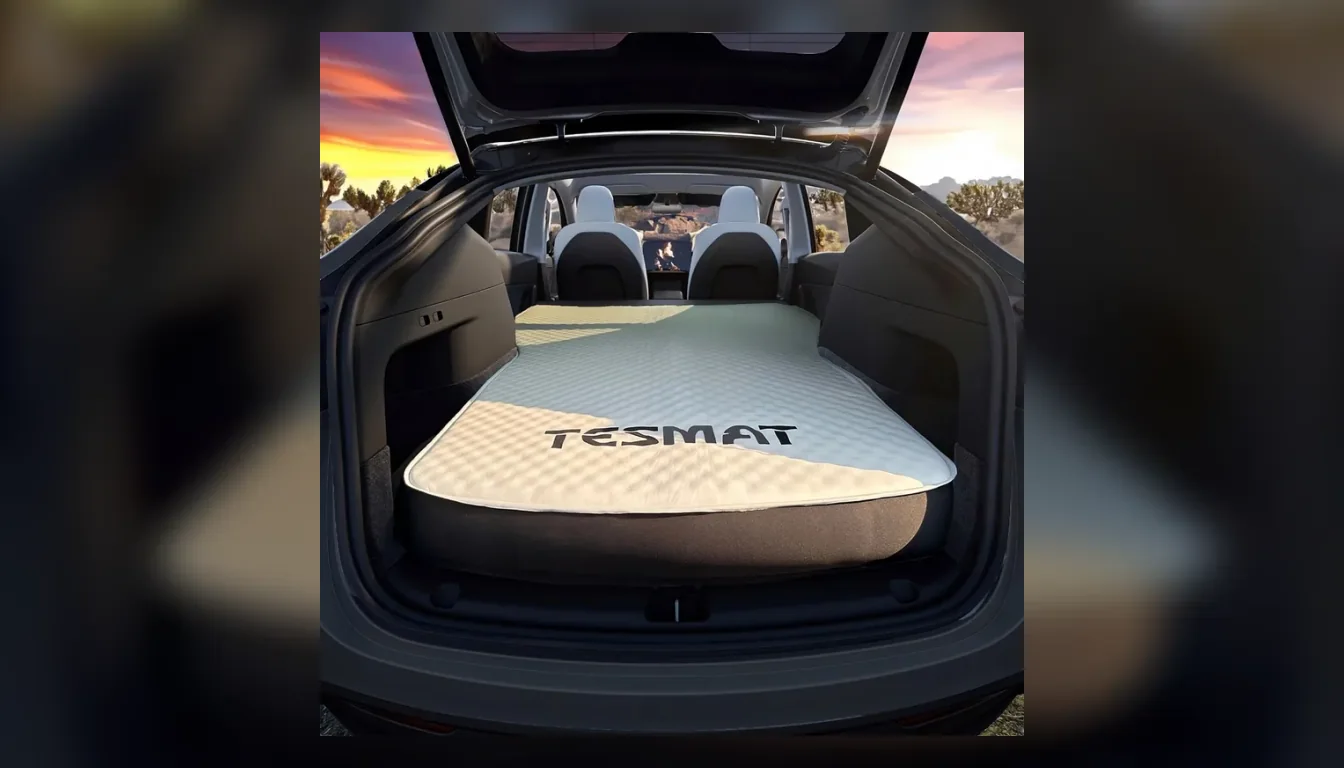
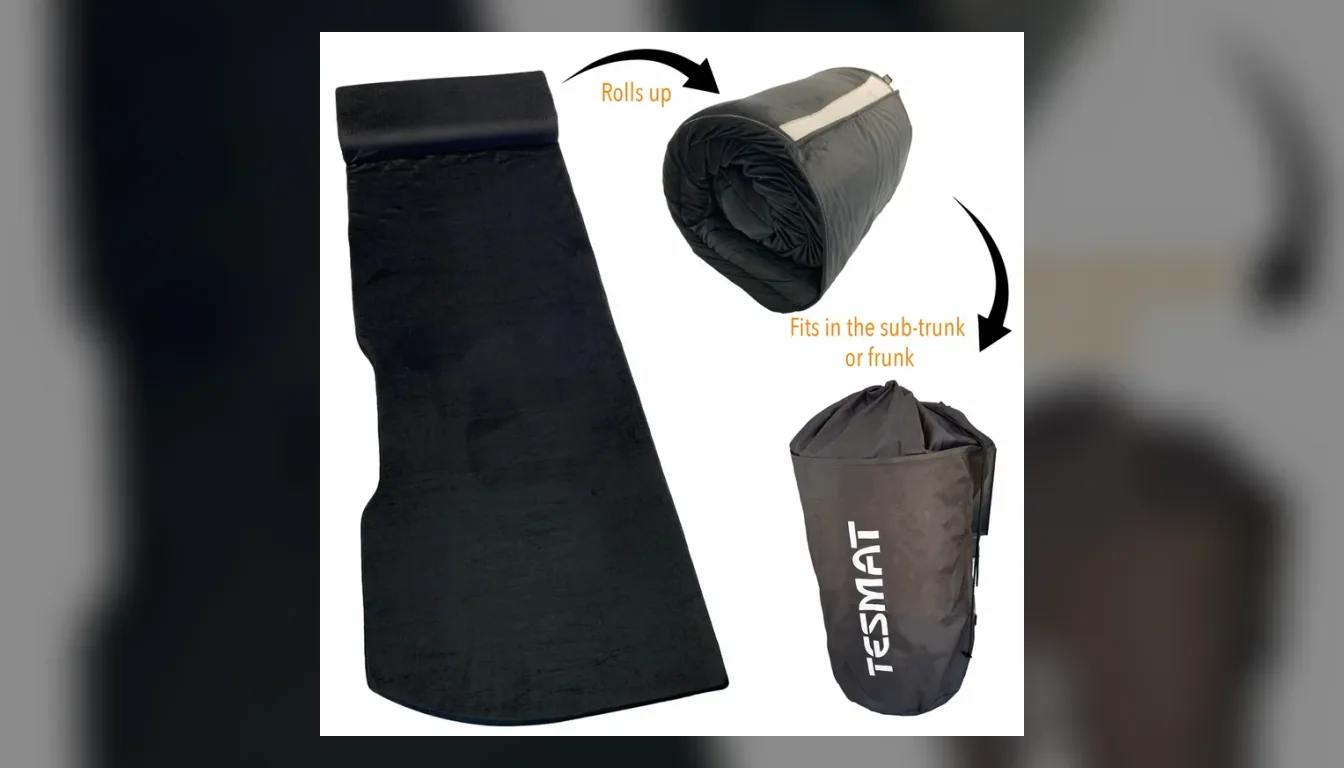
Compare the products we currently track
Check exact fit, observed price, pump type, warranty and the evidence limits before you buy.